


Author of the Week
/ 13 July 2026
Poetry – a space of freedom, light and love
Author of the Week: Albania
Poetry and literature entered my life during a crisis that was both personal and collective. It was a time when the paths toward a normal life were closed, and I, as a person who learns by seeking paths, as Franz Kafka advises, found those paths in literature.
At that time, everything in my life was fogged, scarce, impoverished. People spoke of poverty, war, killings and exile, while literature opened a path before me, offering consolation. Terrified by reality, my heart was captured by art, and the first idea I formed about it was inseparable from the idea of freedom. Later, first as a reader and then as a writer, I found freedom in literature, but also lightning to overcome great darkness, and love to conquer hatred.
It has long been said that literature is connected with experience, and my relationship with literature in general – and poetry in particular – is deeply connected with my personal experiences: the effort to find spiritual freedom at a time when it was absent in my homeland, Kosovo; to find light when darkness was overwhelming; and to find love when hate reigned supreme.
Often, when I look back, I tell myself that literature helped me save my life, and echoing in my heart I hear two lines by the Nobel laureate, Czesław Miłosz, from his poem ‘Dedication’:
‘What is poetry which does not save
Nations or people?
A contrivance with official lies.’
Hearing these lines echo in my heart, I said to myself: poetry saved me, and in a way, it also saved my people. In the 1990s, we had a political leader who was a writer, a man of books – Ibrahim Rugova – who, through aesthetic refusal,[1] created a model of political resistance. He believed in the power of the word as the only weapon in the struggle for freedom. For an adolescent like me, this belief was a force of almost celestial proportions.
And now, when I ask myself – or when others ask me – how poetry and literature entered my life, I return to my adolescence. Before me appears the novel Chronicle in Stone by the great Albanian writer Ismail Kadare, which contains a striking sentence: ‘You cannot understand what a free city means, because you are growing up in captivity.’ I wandered through this sentence as though through thick fog, feeling deeply the weight of the tragedy it conveyed. It seemed as if Kadare was speaking directly to me, which saddened me, but at the same time the novel enchanted me so profoundly that I reread it several times and fell in love with poetry and literature as I struggled to understand (or perhaps find) the freedom that was removed from my real life.
It was nearly an entire decade during which I lived without physical freedom but with the freedom that art gave me. In that endless tunnel of darkness, poetry appeared to me as a light that guided me so that I would not die in the dark.
The reality was harsh, an oppressive power had reduced my homeland to deep misery where all human freedoms were suppressed and the language of hatred and division permeated the very air we breathed. During this difficult time, we, Kosovo Albanians, were denied access to schools. Secondary schools and universities were seized, and we were forced to establish a parallel education system in private homes. It was then that I escaped into a parallel reality – the world of literature – which fascinated me because it was so rich compared to the poverty of the real world in which I lived. Under those circumstances, my connection with literature was sealed like a marriage born of great love, with poetry remaining the crown of that union.
I have always thought of poetry as a redemptive human activity, a space where human beings wage battles for true freedom that appears in its most sublime forms in language.
Why this faith in art?
The reasons are certainly many and mysterious, much like art itself. Yet there is also a concrete role the power of poetry and literature plays in the life of the Albanian nation. In our history, this human activity – and language itself – has become a model for the search for freedom, dignity and identity. Albanian writers, from the late Middle Ages through the National Renaissance and into modern times, often assumed roles resembling those of prophets. Many years later, after we gained physical freedom and I became a writer, I read the Nobel lecture of laureate Isaac Bashevis Singer, who observed that in the history of ancient Hebrew literature there had never been a fundamental division between the poet and the prophet, because, he said, ‘our ancient poetry often became law and a way of life.’ Indeed, I had lived with a similar conception of poetry long before I came to know it deeply. Art became, from an early age, a way of life in which form was as important as content.
The American poet Walt Whitman calls on us, as readers and poets, never to stop believing that the words of poetry can truly change the world. He urges readers never to stop dreaming, because dreams lead us toward a better and truer world. This call, under social conditions where human dreams are systematically destroyed, appears as a small but precious light of hope.
This was the kind of faith I have had in poetry from the moment it took root within me – and perhaps I was even born with it – as a great love of light meant to dissolve the fog. At that time, I lived in darkness, fear and profound anxiety, and I challenged that anxiety with the only weapon I possessed: literature. Thus, poetry became for me an expression of spiritual freedom and a daughter of light, a definition I did not formulate consciously then, but one that I live by.
When real time seems to have stopped, the only time that makes sense is the time of literature. When one lives in difficult, impoverished times when isolation is normal and the language of hate dehumanises people, poetry is a space of freedom, light and love, but also an opportunity to overcome difficulties. I believe in the power of literature and its tools, and I believe that obstacles can be overcome – as the writer Thomas S. Eliot said: ‘While language may constitute a barrier, poetry itself gives us a reason to try to overcome it.’ Through the invisible power of poetry, I have overcome many obstacles and discovered freedom in its most sublime form that recognised no barriers and allowed me to walk the streets of Florence with Dante and the streets of Prague with Kafka.
After many years, I believe in this power of poetry even more, though now for different reasons. I believe that poetry serves as a means of transcending the barriers that language imposes – in agreement with Mario Vargas Llosa, who wrote: ‘I am convinced that a society without literature, or a society in which literature has been relegated – like some hidden vice – to the margins of social and personal life, and transformed into something like a sectarian cult, is a society condemned to become spiritually barbaric, and even to jeopardize its freedom.’ Indeed, I believe that literature can nourish a sense of fraternity, enabling us to know one another better and to discover within its riches our shared humanity.
Thus, my first encounter with poetry was linked to the idea of freedom, then to the idea of light. Between them stands poetry itself – as a creation, the music of life, of love and eros, both in its mythological sense and as agapes in the Christian sense: a love that recognises no limits.
The third element – perhaps the very engine that sets human beings in motion in their search for freedom and light – is love. Just as light is the source of existence, love is the oxygen that sustains all relationships. Both love and poetry are life-giving forces. For this reason, literature and love often seem to merge with one another.
Perhaps our contemporary idea of love as a sublime feeling has its origins in the Psalms and the Song of Songs, which have ennobled humanity and helped it develop a penchant for beauty and love, and understand the sweetness of life and the bitterness caused by its loss.
Another great poet, Dante Alighieri, writes in Canto 33 of Paradiso: ‘The Love / that moves the sun and the other stars.’ I often think about these lines and reflect on them in relation to the relationship that Albanian art, literature and poetry have over the centuries established with Albanianness and with my own existence.
It May Be as in the Beginning of Time is the title of my latest book of poetry, published in Tirana last year. Why this title? Because, whenever I write (about) poetry, I feel somehow transported to the beginning of time – when things and images appeared without form and names, and had to be given life, vitality and shape within aesthetic reality.
I write poetry whenever a mysterious force within me compels me to bring my thoughts into the poetic form. For example, I may see a beautiful autumn leaf break away from a branch and be carried by the wind into the mud, and I would begin to think about its existence. It is a mysterious and magical existence, because I know that in the spring the tree will once again be filled with life and new leaves. But what happens to the leaves that fall from a human life? This question leaves me stunned, and it is precisely there that poetry is born.
I continue to believe that we need poetry for countless reasons, but above all to preserve our humanity and beauty. The poet Octavio Paz warned that a society that removes poetry from its life risks committing spiritual suicide. In other words, whenever society is deprived of the beauty of poetry, it lives in a toxic atmosphere and languishes, because poetry is oxygen for the mind and the heart. It illuminates human darknesses, expresses feelings that cannot otherwise be expressed, records truths greater than those recorded by history – as Aristotle noted – and continually gives human beings the opportunity to dream of a better and freer world.
Writers from different periods have emphasised that poetry develops our capacity for contemplation and teaches us to live with memory, while, in the words of Henry Miller, ‘art teaches nothing except the meaning of life.’[2]
Readers often ask me how it was possible to believe in literature when real life was so harsh? And every time I try to articulate an answer, words seem inadequate. They cannot be exchanged for the profound truth with which poetry enveloped me at a time when art gave me the light with which to dispel the darkness in which I lived. It gave me wings to fly beyond my own age and beyond borders, to experience countless realities and human lives, to walk down the roads of hell with poetry guiding me like Dante’s Virgil.
Poetry is what makes life more beautiful and more meaningful. It teaches humans freedom, and we need those lessons as much as we need clean air. And I continue to believe that poetry can be an expression of hope in a difficult time, a time when superficiality seeks to replace depth and when impoverished, schematic language threatens to replace the rich language of poetry.
The writer Jorge Luis Borges, in his famous lecture on poetry, said: ‘Aesthetics is as clear, as direct, and as indefinable as love, as the taste of fruit, as water. We feel poetry as we feel the nearness of a woman, or as we feel the fragrance of mountains or the depth of the sea.’[3] Every reader of poetry senses this astonishing dimension of aesthetics. More importantly, poetry gives humans a way out, it teaches the best escape from spiritual stagnation and dehumanisation.
As both a reader and a poet, I live with this ideal because poetry has taught me to find a path of light in moments of darkness, freedom where there is threat, love where hatred is spread. It has taught me to find shores of calm when confronted by the great waves of life.
Poetry must fulfil this noble role even in our time, when there is so much spiritual turmoil and uncertainty.
And to this power of literature, I dedicate myself forever.
[1] Rugova, Ibrahim, Refuzimi estetik, Rilindja, Prishtinë, 1987.
[2] Miller, Henry. The Wisdom of the Heart. New York: New Directions, 1941, p. 24.
[3] Borges, Jorge Luis. Seven Nights. Trans. Eliot Weinberger. New York: New Directions, 1984, p. 77.


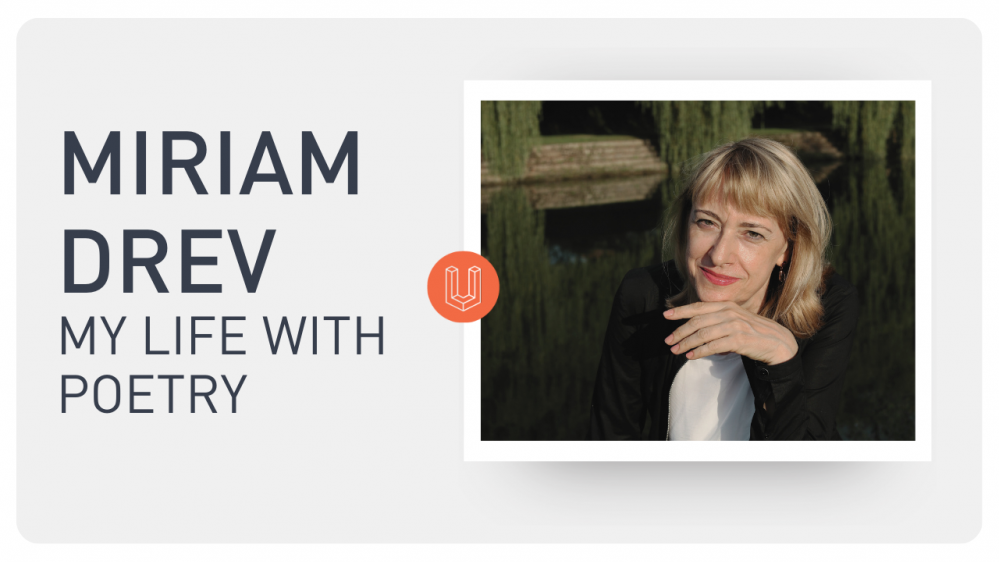


Author
Ndue Ukaj
Ndue Ukaj is an Albanian writer from Kosovo. He has published six poetry collections, two short story collections, a novel and three books of literary essays and criticism.
He is the recipient of several awards, including the Best Writer Award at the book fair ‘Libri të bân mire’ (Shkodra, 2025), the national award for best poetry book in Kosovo (2010) and a prize at the International Poetry Festival ‘Ditët e Naimit’ (2011). He received a Creativity Prize at the Naji Naaman Literary Prizes (2016).
His writings have been published in international anthologies and journals, translated into many languages, and nominated for the Pushcart Prize by Mad Swirl (2025).
Ukaj’s work explores the disturbance of the Balkans, themes of war and peace, and the memories of a generation shaped by loss and enduring hope. His literature bears the elegance of European expression and the European aspirations of the Albanian people, a quality praised by discerning literary voices.
He is a founding member of the Albanian Writers Forum, ‘Forumi 26’.


