


Author of the Week
/ 23 January 2026
Social poetry: on writing ethics and ownership of stories
Author of the Week: Czech Republic
I never wanted to be a full-time poet. In fact, I am not always certain that I can call myself a poet at all. My writing life has been discontinuous: there were years when I did not write, years devoted entirely to living, which only later transformed into years of writing. Since 2022, however, these two modes have begun to exist simultaneously. I live parallel lives in two overlapping worlds – one in which poetry is scarce or even absent, and another in which I attempt to write about that scarcity. Since February 2022, to be precise – the day the Russian Federation launched its full-scale war against Ukraine.
I was born in a country that shares a border with Ukraine. I currently live and write in a country that does not. Yet the war immediately revealed how deceptive such distances can be. Ukraine is closer than maps suggest: geographically, culturally, historically and physically. The proximity was not abstract; it arrived with people.
I am a poet, among other things. I am also a migrant, and migration has been a recurring subject in my work long before the war began. I am, however, a migrant by choice – deeply privileged, legally protected, mobile. This privilege is not incidental; it demands to be acknowledged and interrogated. My long-standing interest in civil rights, citizenship and legal belonging stems precisely from this awareness of how unevenly such rights are distributed, and how profoundly one’s life is shaped by a passport or a place of birth.
A few days after the Russian aggression escalated, I learned about an opportunity to volunteer at a refugee assistance point at Prague’s main railway station. I signed up. My tasks were simple and repetitive: welcoming people who had just arrived, showing them where to go, helping them buy tickets, serving tea – plain, as sugar was forbidden – offering directions and basic information. These were small gestures, practical and necessary, performed in a space saturated with urgency and uncertainty.
Almost immediately, without any conscious or deliberate decision, I began to write. I was writing about what I had witnessed but never experienced. I was surrounded by stories that were not mine, stories shaped by loss, violence and forced displacement. This raised an ethical question that I had not anticipated: what does it mean to write about the suffering of others, especially when one is positioned safely outside of it?
The stories I encountered belonged to someone else, yet I found myself lending them the language of their new country – Czech. This language, though not my mother tongue, became the language I chose to inhabit: to live in, work in, write in, love in. It is the language of my poetry. In this sense, writing became a form of mediation, perhaps even advocacy – but one that is fraught with responsibility. To speak in a language that grants access, visibility and legitimacy is also to exercise power.
Power comes with responsibility. My responsibility in this particular case was to answer the inevitable question: who do the stories belong to? The stories belong first of all to the people who live them. Their experiences are not raw material, not examples, not symbols. They are lives. Any telling that ignores this risks turning attention into appropriation.
At the same time, stories are never entirely private. The moment they are spoken, overheard, written down or shaped by language, they enter a shared space. Institutions claim them – through files, case numbers, reports and categories. Social workers, officials, doctors and translators are required to retell them in specific formats. In that sense, stories are constantly being taken, processed and redistributed.
The ethical question, then, is not simply ownership, but responsibility. Who has the right to tell, and under what conditions? For what purpose? With what degree of care, accuracy and restraint? Poetry can acknowledge this tension by refusing to complete the story, by leaving gaps, by foregrounding its own position as listener rather than author.
So the stories belong to those who live them – but the obligation to those who repeat them. How a story is told, what is omitted and what is left intact matters as much as the story itself.
In moments of crisis, poetry can feel inadequate, even indulgent. And yet silence, too, carries ethical weight. The question, then, is not whether one should write, but how. How to write without appropriating stories and narratives that are not one’s own. How to resist turning real suffering into metaphor or aesthetic material. How to remain attentive to vulnerability, consent and asymmetry of power.
I have been thinking about these questions since I wrote my first notes from the station – short poems about solidarity, about escaping to safety, about the simple act of welcoming someone. But I was also writing about double standards: about how quickly the atmosphere shifted when Roma refugees from Ukraine began to arrive, and how differently they were received. What I was witnessing demanded attention, even if it resisted easy language.
These poems were unlike anything I had written before. They were far less imaginative, more civil in tone – brief, exact, almost documentary. I deliberately avoided ornamentation: no decoration, no extended metaphors, no lyrical distance. I wanted the voice to remain clear. Not necessarily loud, not emotionally amplified, but clear. I wanted the poems to function as statements – precise records of what I had seen and heard.
Equally important was my position within these texts. I did not want to stand apart or above. I wanted to remain one among many, one presence in a crowded space shaped by urgency and vulnerability. I had stepped into someone else’s story not because it was mine to tell, but because being there felt necessary. Writing, then, became a way of acknowledging that presence without claiming ownership – a way of bearing witness while remaining conscious of the limits of my role.
And what is my role? It’s changed a lot over time. I started as a volunteer with an informal grassroots group co-ordinated by one of migrant support social services operating in Prague. There, in the station, on a volunteer shift, I decided I wanted to go further. Ten years after my first graduation I went back to school to purchase another degree in social work to continue supporting migrants more professionally. While taking this path, I didn’t think of writing, not at all.
Then I joined an NGO counselling centre for migrants as an intercultural worker. While starting my job, I didn’t think of writing, not at all. But it came on its own. Intercultural worker, sometimes called intercultural mediator is a person who accompanies clients with migration background to various public offices and institutions, provides community interpreting and explains local context and provides basic counselling. It’s a role that takes you to places you only know from newspapers. All kinds of wards in all possible hospitals. Child protection services. All possible branches of Labour Office. Immigration Police. All sorts of places. All sorts of stories. One system, very hostile at times. I was no longer a volunteer, a kind helping hand. I was a professional, with work standards, work ethics, responsibilities. People trusted me with their trauma and crises. I knew I couldn’t retell their stories, because they were not shared with me as a writer. They didn’t even know that I was a writer. Their story belonged to them only even though it was shared with me. I don’t think it’s appropriate to retell stories of someone who only told them in a very specific communication situation, under specific circumstances. Intercultural worker Zofia refuses to outsource to poet Zofia.
Some time passed. I completed my studies and officially became a social worker. My work shifted primarily toward social counselling, a role that offered an even deeper, more granular view of the system’s limits – how it functions, where it fails and whom it leaves exposed. Counselling meant sitting longer with people’s situations, tracing not only immediate crises but the structural dead ends that produced them.
By then, I already knew that the notes I was taking would one day become a poetry collection. Not as documentation, and certainly not as testimony. The poems would not be about individual lives, but about the system itself: the way it perceives human beings, the categories it imposes, the thresholds it guards, the points at which it stops listening. They would be about limits – legal, bureaucratic, moral.
There is a voice in these poems, but it is neither mine nor my clients’. It is the voice of someone trying to navigate the system without instructions, without a map, without anyone explaining the rules. A voice suspended between offices, waiting rooms and decisions deferred. It is an anonymous voice, intentionally so. A voice that could belong to anyone. Because that is the point: any of us could become that someone, should the tables turn.
In my social poetry, as I call it, I try to keep the language as simple as possible. I place myself in the role of a listener – someone standing in a public authority office, in a waiting room or a corridor, on the margins of institutional power, taking notes. I quote forms. I quote official notifications. I write down fragments of overheard conversations, sentences spoken casually, under stress, or in resignation. I read laws, regulations, instructions. I try to stay focused and clear, not to add more than is necessary. One metaphor at a time is enough. Anything more begins to explain rather than show.
Many people – friends, readers – have asked why I haven’t turned to prose to write about this experience of translating the system to newcomers. For me, the answer is very simple. I believe in poetry and in its ability to hold a great deal within a very short form. Poetry is not a shortcut; it is a concentration. I don’t need a narrative arc or a storyline to move things forward. I don’t need characters or development. What I need is precision.
Poetry allows me to create images with a minimum of words, to work with silence, and what remains unsaid. I am not interested in dramatising these situations or turning them into a personal confession. I want the language to stay civil and calm, almost neutral, close to the tone of the institutions themselves. In that restraint, I find space to point at things that deserve our attention – quietly, without accusation. Not by telling a story, but by isolating a moment. Not by raising my voice, but by listening carefully and writing down what is already there.
Everything that is already there is political. Simply being invited to witness migrants’ everyday experiences – visiting hospitals, planning childbirth, looking for housing, searching for work, trying to live a simple yet meaningful life – reveals just how deeply politicised the world around us is. These are not exceptional moments; they are ordinary, necessary acts. And yet they unfold within systems shaped by power, language and regulation. To observe them closely is to see politics operating at its most intimate level.
About fifteen years ago, the Czech poetry scene went through an intense debate about socially engaged poetry. The central question then was whether poetry should be political at all, not how it might be. Today, that question feels almost obsolete. Claiming that poetry can exist outside politics increasingly appears to be a privilege – one available only to those whose lives are not constantly filtered through institutions, permissions and forms. The personal is political not because we declare it so, but because it is.
Silence, too, is a position. Not speaking about certain things is a choice, and therefore a political act in itself. Ignoring systems does not place us outside them; it merely confirms their quiet authority. This understanding is another reason why I have chosen poetry as my form of expression, rather than essay, reportage or narrative prose. Poetry allows me to stay close to lived reality without explaining it away, to register what is present without translating it into argument.
The choice of poetry is itself political. Its compression resists simplification, its openness resists instruction. At the same time, refusing to write – stepping back, opting out – would also be political. There is no neutral ground. To me, what matters is attention: listening, recording, shaping language carefully enough to reveal what is already there, and trusting that even the smallest, quietest poem participates in the larger conversation we are all part of.
Social work and poetry may seem far apart, but they share several deep and practical common grounds. Both begin with attention. Social work depends on careful listening – to stories, needs, gaps and silences. Poetry does the same with language, listening not only to what is said but to how it is said and to what cannot be fully articulated. In both cases, attention is an ethical practice.
They also share a relationship to power. Social work operates within institutions while supporting individuals who must navigate them. Poetry can reflect and question the language of those same systems – forms, regulations, categories – without turning experience into argument. In that shared ethics of listening and responsibility, social work and poetry meet. And this is exactly what I’m trying to achieve.


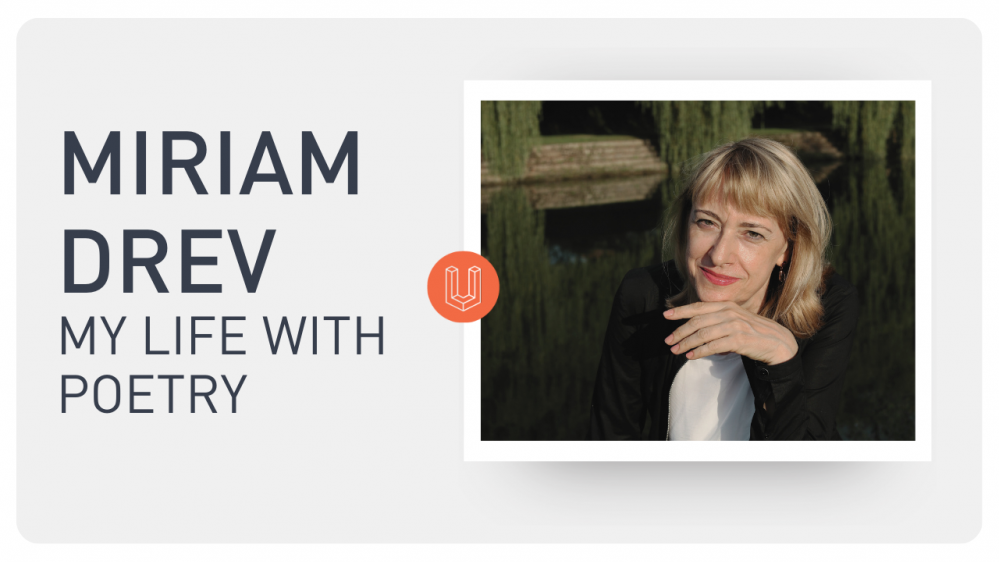


Author
Zofia Bałdyga

Zofia Bałdyga (born 1987, Warsaw, Poland; currently based in Prague, Czech Republic) is a poet and translator. She writes in Polish and Czech, and has published five volumes of her own poetry in Polish to date: Passe-partout (2006), Współgłoski (2010), Kto kupi tak małe kraje (2017), Klimat kontynentalny (2021) and Nauka oddychania (2025). Her first Czech-language volume Poslední cestopisy (fra) was published in 2023. Bałdyga holds MA in South and West Slavic Studies from University of Warsaw. She mainly translates contemporary Czech and Slovak poetry into Polish, occasionally also Armenian poetry. She works as a social worker supporting migrants.
Photo by Jan M. Heller


