


1.
War uprooted me. Then came the division – and with it, the burden of living under occupation. But what does it truly mean to inhabit a divided country? What becomes of the poet in such a fractured space? And how does one write poetry under the weight of occupation?
Friends – writers and poets from the southern part of Cyprus – often ask: ‘Why not move south? Why not live in the free zones?’ There is order in the South, yes. But the North offers chaos – and for now, I say half in jest, chaos suits me and my poetry better.
To live in the north of Cyprus, a region both divided and occupied, is undeniably difficult. Yet it also offers a strange kind of richness – a tension that feeds the thought and the verse. Division breeds disorder. Occupation deepens it. Let it. Poetry thrives in chaos. Chaos is never dull. It is the constant anticipation of surprise, of death even.
Living as a poet matters to me almost as much as writing poetry itself. Since returning to the island in 2003, I’ve tried to live this way – despite everything. I resist borders and boundaries, including the taboos and norms.
I’m not a teacher, not someone who observes the island through the window of a classroom.
I look from the streets, the fields, the hills, the gardens, the ditches, the rooftops – from every open space. One foot in the village, the other in the city. I’m protected from spiritual suffocation by my close relationship with clouds, trees, birds and weeds. In difficult times, poetry still holds me upright. It deepens and refines my connection to nature and to people. Without poetry, I can’t go on.
I am an idler, and I move slowly. Almost every day, I watch the sun rise and set. I often witness the moon’s ascent, and less often, its descent. And this is where poetry begins for me – in the poetics of daily life, in the pursuit of its hidden stories.
One of the greatest problems of our age, or perhaps its defining malady, is speed, a phenomenon largely driven by technology. Speed brings with it superficiality, moral and cultural decay, a sense of emptiness and nothingness, dissatisfaction, restlessness and a loss of meaning. Ultimately, it leads to a state of inner crisis. In contrast, slowness offers depth, subtlety, joy of living and a sense of fulfilment. To slow down is to reconnect with the richness of experience and rediscover the value of presence.
Everyone seems to be telling stories these days, but few read poetry. Poetry is often dismissed as outdated, yet in this age of relentless speed, it is what we need most. Life moves fast and poetry, thankfully, slows it down. Poetry is slow; it is slowness itself. And what is slow is always rich, layered and meaningful.
There was a time when poetry was part of everyday life. Now, it’s absent. Yet it lies at the heart of everything. Many who are searching are, in truth, searching for poetry – they just don’t know it. They need poetry, but they’re not cognisant of that need. Just as they’ve grown distant from nature, they’ve grown distant from poetry. They overlook the poetic dimension of daily life. And yet, this island holds a culture that is deeply attuned to poetry.
I am not divided. Not truly. Nor is the island itself – only the country. And it is politics that divides it. The border is a high-voltage line of political tension. It is difficult to be a poet here and not write political poetry. Our daily lives are unnecessarily saturated with politics, and I sometimes ask myself: in this artificial and constricted reality, in what may be the world’s most political island, what purpose does poetry serve?
Despite all political and social tensions, poetry continues to shape literature here. History, environment and circumstances are decisive forces on this island, as they are everywhere. Division and borders influence and shape our poetry, too. There is hardly a Cypriot poet who hasn’t written about the border. A rich, multilingual anthology of Border Poems could easily be compiled. However, I fear we wouldn’t be able to fit them all into a single volume.
***
As Cypriots, we often forget that our most urgent and fundamental problem is division – the borders and the occupation. The border, quite literally, poisons our daily lives. It distorts our routines, unsettles our minds and pushes us toward despair. It is no exaggeration to say that it depresses us collectively. This is the issue we must focus on first if we are to move towards resolution.
Antidepressants are the second most sold medication in local pharmacies. In bookstores, the bestsellers are self-help titles with names like How to Be Happy. This suggests that depression is a far more pervasive issue in our society than it appears on the surface. Of course, poetry cannot save someone who has already jumped from the fourth floor or hanged themselves. But perhaps it can prevent them from ever reaching that point.
Yet poetry – and the beauty it represents – is everywhere: on both sides of the border, in the mountains, forests, along the coast, in gardens, fields, streets, bars and bedrooms. Where poetry exists, there is no emptiness, no meaninglessness.
***
One of the central themes in my poetry is guilt. Whether we witnessed the events that unfolded in Cyprus or not, I believe we must feel guilty. Guilt leads to responsibility – it encourages self-reflection and can motivate us to work toward peace and reunification.
Speaking personally, I grew up listening to stories of heroism told by my father, my uncles and my grandfather. I heard, with my own ears, what they said they had done to Greek Cypriots. At the age of eighteen or nineteen, I began to question those stories. And I realised that our fathers, uncles and grandfathers had committed grave mistakes, and that we are the ones paying the price. I felt ashamed of what they had done, and I began to feel guilty.
But guilt does not make me sick. On the contrary, it keeps me alert, tolerant, moderate and open to reconciliation. It helps me become a better human being.
Every feeling of guilt is a poem. And I write guilt literature – shamelessly.
In Cyprus, many surnames are stained with blood. Mine is among them. That’s why I don’t publish under my surname here. Instead, I split my first name in two – just like my country. And I will not reunite my name until the country itself is reunited.
2.
Let me take you across the border…
Here it is – the line that splits Nicosia in two, and with it the entire island. A place where the real, the unreal, the surreal and the absurd converge. A place unlike any other.
Though people seem accustomed to it, though they’ve normalised its presence and grown numb to its existence, the border continues to affect our psychology in deeply negative ways. Supposedly, it protects both sides from each other’s ill intentions. In truth, it fucks up both sides equally. Nothing enrages me more than the border. How much longer can those who live here endure this reality by locking their doors and windows tightly? How much longer will they blind and deafen themselves to the shame of this division? Above all, those who live here should feel shame because of the border, but how many actually do? (In fact, what’s harder than living in a divided country is living among people who feel no shame about it.)
Whether one is a migrant, a refugee, an exile, or has lived in the same house for eighty years, no one truly feels at home in a divided country. Not on this side, nor on the other.
I still can’t quite believe that the border crossings have reopened after being sealed for twenty-nine years – and that they remain open. I feel compelled to cross the border every day, just to see it open, to remind myself that it is, in fact, open. So that my belief in its openness doesn’t fade.
I grow weary of the North, and so I cross to the South –
with my first daughter, stillborn.
I present my first makeshift ID, pass through the first ‘security’ gate and exit the North. Then I walk through the Buffer Zone – a space that can be crossed, but where camping or sleeping is forbidden. They call it the Green Line, the Buffer Zone, the Neutral Zone, or, despite being filled with plants, animals and UN soldiers, the Dead Zone.
The Buffer Zone belongs to both sides – or perhaps to neither. It is the territory of hybrids, of those who exist between.
That side is not secular; this side is not civilian. One embraces capitalism, the other clings to militarism. Which is better? Neither, I believe. For me, the Third Zone – the Buffer Zone, the so-called Dead Zone – is the most honest space of all. It is the place between, the place of ambiguity and contradiction, where belonging is suspended and identity is fluid. In its silence and tension, it offers a kind of clarity that neither side can provide.
I belong neither to that side nor to this one.
I dwell in the Third Zone –
among kind strangers
who come bearing false promises.
In the Buffer Zone, right in the heart of the city, within this oasis of calm nestled in the green belt, I move more slowly than usual. Despite the presence of UN soldiers and barbed wire, the air here is the cleanest. It is where I find the silence, the coolness and the slowness I seek. What I drop on my way in, I often find again on my way out. The Buffer Zone is always generous with me. Being ‘in between’ feels good, it inspires me. The Buffer Zone nourishes me. For both North and South, the Buffer Zone is an alternative space. When the confinement and incompleteness of either side become unbearable, this is the only place on the island to escape to. Being here feels like being in a future United Cyprus – or like being in neither side at all. The Buffer Zone is an island within the island.
It is not a bridge from one side to the other. As long as things remain as they are, this is the most ideal place for people like me. Here, trees brought from five continents during colonial times still grow – migrant trees that have long forgotten their homelands. I want to live not in the North or the South, but right here, in this space of abandonment and decay, among crows, owls, hedgehogs, lizards, snakes and foxes.
(As I pass through the Buffer Zone, I often feel as though I’m being watched by the ghosts of those who were shot and killed trying to cross the border during the years it was closed.)
After crossing the UN-controlled zone, I present my second makeshift ID and pass through the second ‘security’ gate to enter the South. The act of crossing calms the anger the border stirs in me. When I feel suffocated in the North, I cross to the South; when I feel suffocated in the South, I return to the North. I cross from one side to the other every day, sometimes twice, sometimes three times, finding a strange kind of joy in the movement itself.
Fuck the border, one side and the other
the island is not divided, just its meaning,
a monument to foolishness, in a pile of tin and wire
As soon as I cross the border, the language and voices change, but the scent and rhythm remain the same. Even when I walk with peaceful, forgiving steps, the terrifying past follows me, no matter which side I’m on. It bruises my present.
Suddenly, the imam begins to shout like Tarzan. And the priest, not to be outdone, rings his bells with all his might. Though they would rather avoid each other, they sometimes meet – because both live within the walls. When they do, they never speak of religion or God. They talk about the weather, the seasons, rising prices, and the youth losing their faith. And the one thing they always agree on is the devil – the fear of the devil.
What I love most in this city is crossing from one side to the other. It doesn’t really matter which side I’m on, as long as I can cross. As long as I can wear down the border.
This artificial thing we call a ‘border’ cannot withstand nature. It cannot resist change. One day it will collapse. But on this island, filled with narrow-minded people born of cousin marriages, everything changes so slowly that it could take another fifty, even a hundred years.
This city has a seven-layered history, full of invasions and occupations. Wherever you dig, you find a grave. Everyone lives atop a cemetery – beneath us, graves; above, cafés, restaurants, bars, brothels, casinos and shops selling all kinds of things. And people, bored of old pleasures, searching for new ones.
Within the walls, there is no street or alley I haven’t entered, no path unfamiliar to me. But there are still so many homes, courtyards and gardens I haven’t stepped into. The old streets, the old houses, the old shops – this worn-out, decaying atmosphere doesn’t make me feel hopeless. On the contrary, it’s the very reason I keep coming back.
There are so many familiar faces in this city, young and old, men and women. People I somehow know, though I can’t remember from where. I’m never in a hurry (let those in a rush run). I greet, ask questions, smile, joke with strangers and friends alike. I try to remember what I’ve forgotten.
Instead of struggling to find space on the narrow pavements crowded with occupying soldiers on leave, I walk the side streets they avoid. Though winding, the side streets are quiet and full of pleasure.
Once again, I leave the city, accepting this reality and all its contradictions, taking the shortest route possible.


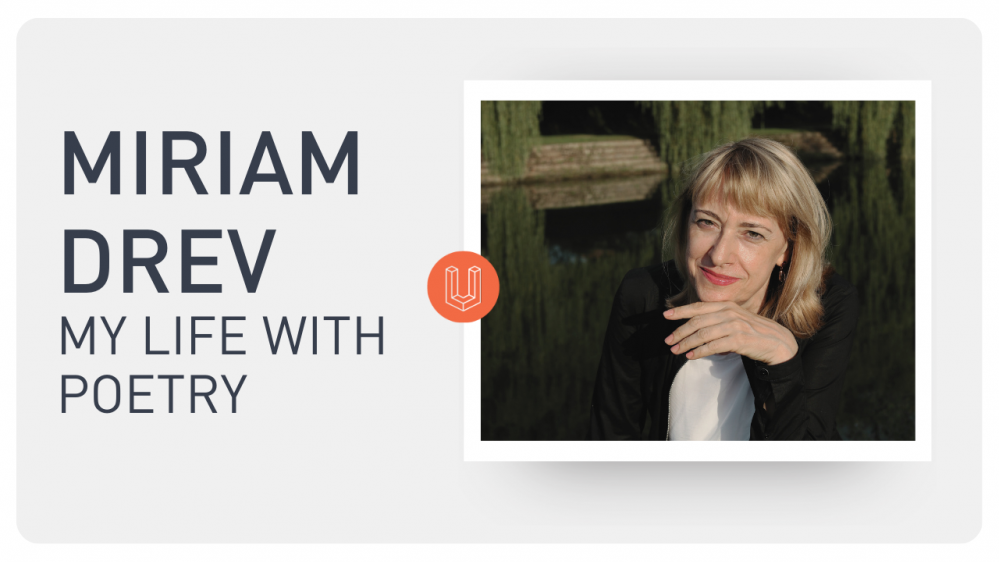


Author
Gürgenç Korkmazel

Gür Genç or Gürgenç Korkmazel, 1969 Paphos born poet, writer, translator. Since 1992 he has published seven poetry, three short story collections. He has prepared Anthology of Greek Cypriot Poetry and Anthology of Turkish Cypriot Short Story. He has also translated the poems of Taner Baybars, Niki Marangou, John Clare and Lawrence Durrell. His books have been published in Nicosia, Istanbul and Athens. His poems and short stories have been translated into many languages.


