


Author of the Week
/ 11 August 2025
Let’s intervene: a personal story of the New Wave of Polish poetry
Author of the Week: Poland
Today when we read the poems of Polish poets who pierce capitalist bubbles and reflect on lost opportunities and mediocre visions of the future – such as Tomasz Bąk, Justyna Kulikowska or Szczepan Kopyt – we are not far from what was happening in poetry half a century ago. The generation of 1968, in Poland known as the New Wave (Nowa Fala), became one of the most significant points of reference for contemporary poetic movements, precisely because of its ability to reconcile moral responsibility, including opposition to the crimes of communism (anti-Semitic campaigns, anti-democratic social transformations, military regime, friendship with the ‘brotherly nation’ from the East and the distortion of language through government propaganda), with the aesthetic courage of drawing on the legacy of the avant-garde. For example, Ryszard Krynicki’s volume G from 1971 rediscovered Dadaist collage techniques, while my father Julian Kornhauser’s 1972 book There Will Be a Holiday Even for the Lazy combined the energy of Expressionism with Surrealist visions, and Ewa Lipska or Stanisław Barańczak successfully used creative recycling methods resembling the Pop Art concepts.
The slogans calling for ‘speaking plainly’ were accompanied by a belief in the necessity of developing poetics. Poems composed of newspaper headlines – propaganda mush – mocked their cheerfully optimistic tone; poems that gave voice to ordinary citizens, written in colloquial, impoverished language, pushed back against censorship, which blocked the publication of books and the possibility of holding author meetings. Later generations, launching after 1989, eagerly referred to the legacy of the New Wave: first polemically (criticising poets’ ‘attachment to values’), then approvingly (though instead of communism, capitalism became the new anti-hero in poems).
For me, as a poet and the son of a poet, the New Wave had a much more intimate, domestic, familial character.
In fact, I first encountered the New Wave in primary school. In a Polish language textbook (intended for high school seniors, but whatever, we were using it in seventh or eighth grade) there was a group photo: Wit Jaworski with a bag slung carelessly over his shoulder looked a bit like one of the Teletubbies, although I could only appreciate that resemblance much later. Krzysztof Karasek, in a thick sheepskin coat, resembled a local version of Chewbacca, while Ryszard Krynicki peeked shyly around a corner. My parents were standing in the middle; my dad, with the face of a pious altar boy, held his hands close to his body – if he had been under a quilt, he’d definitely have his hands resting neatly on top. My mum, in a stylish fur coat, boots and with a light hat, smiled timidly.
The group looked a bit like a church retreat, a bit like overachieving students. Not that I fault them for their polite poses or the filter that softened all the edges – in fact, unlike other photos in the textbook, this one stood out for its unique convention. While Czesław Miłosz was caught receiving the Nobel Prize, Witold Gombrowicz was shown strolling through Vence and Maria Dąbrowska was petting a Dalmatian, the New Wavers posed for one of Kraków’s top photographers (the date under the photo reads 1973). I remember my first reaction was to mistake those stylish comrades for actors playing real writers; my mum, incidentally, came close to modelling standards – she even received awards like Kraków’s Most Charming Student – and Karasek, in that version, looked exactly like ABBA’s Björn Ulvaeus’s long-lost twin.
Of course, there was also a much more understandable reason for such a reaction. The whole crew was made up of my parents and uncles – honorary uncles, but closer than my biological ones, who were rarely seen in Kraków. Same with Ewa Lipska, Stanisław Barańczak and Adam Zagajewski. So how could this whole eclectic family suddenly show up in a dusty ‘black series’ textbook? No way, they had to be clones, poorly made doubles moonlighting for the Polish education system. We laughed endlessly, especially when my school pal Bartek Jamróz said – with his mouth full of ham sandwich – that my mum was a total babe. Or something like that, hard to tell with the second breakfast muffling the words, but the message was clear.
Our Polish teacher, naturally, used the opportunity and bombarded me with deceptive questions during class, most of which I didn’t understand. I had no idea what was going on with meat shops (Meat Shops was the title of Adam Zagajewski’s famous 1975 volume), pretending to be sad revolutionaries (my father’s book, In factories, we pretend to be sad revolutionaries, came out in 1973 and marked the beginnings of the New Wave poetics), and the whole world that didn’t want to be represented (The Unrepresented World, 1974, was the New Wave’s manifesto, widely discussed in the press). We had more important things on our minds, such as the interschool football tournament. We entered as The Champions, thinking that would intimidate the competition. Unfortunately, a mistake by the organisers got us registered under a much less noble name – Mrs Duda (after one teammate’s mum who signed us up). Demoralised, we lost to the well-organised Cherries team – the KS Cracovia practice field was merciless. And as goalie, I conceded several easy goals and finished the match with a hand injury.
My dad watched the whole disaster with disapproval. A fan of football, weightlifting and sumo, he’d stay up late to watch tournaments and patiently explain the techniques of yorikiri and oshidashi. Uncle Ryszard preferred cycling – you could often spot him hurtling down Parkowa Street into the Podgórze Market at breakneck speed, though I always pitied his uphill ride back toward KS Korona. Uncle Adam could discuss many sports, but it always ended with the Upper Silesian dilemma: root for the reborn Piast Gliwice or remain loyal to Górnik Zabrze? Tradition always prevailed.
And we ran sprints and long-distance races, not just in Madison Square Park, as one famous New Wave poem would have it. We did it on Kraków’s Planty, the Błonia, Jordan Park or along the Vistula boulevards; even in Wolski Forest – racing in the Panieńskie Skały ravine with Uncle Stanisław Stabro, which was better than visits to the dentist dubbed the ‘Butcher of Olsza’ – and also with Jerzy Gizella or Kazimierz Biculewicz. To me, the New Wave included not only those who bore the label but also the orbiting poetical uncles and aunts. Rumour had it that Uncle Stan Barańczak once chatted in the States with Michael Jordan or maybe Larry Bird – some god of basketball, anyway.
Then again, not much of the New Wave was left by the 1990s. The crew scattered, and when they happened to stay over, they’d sometimes wake up in the night shouting, ‘Sweet Jesus, where am I? This isn’t Alabama!’ Fair point – Poland’s fledgling capitalism was a far cry from Alabama. But maybe it was all a charade, with our mushrooming ‘Manhattans’ of cheap clothes and ‘Vegas’ casinos. One even popped up in Beskid Mały – someone added a ‘Vegas’ sign to the village of Las [Polish: forest]; I never thought Nevada was less than five kilometres away. Uncle Jurek Kronhold confirmed it after settling in Silesian Beskid.
Having left their battles with the old system behind, the New Wavers turned to more pleasant things – drinking wine, attending gallery openings, raving about composers. Sometimes the spirit of subversion returned, especially when graffiti appeared reading ‘Donald Duck was Polish too’ and when the marching lustration inspectors passed by their windows – and through musty basements, where, as we know, among thousands of files there was ‘only one living moth, unmarked’ (as my father claimed in one of his verses from Origami, 2007). Free Poland offered thrills no less exciting than night rides in black Volgas or empty meat hooks in shops, which we also know too well from New Wave poetry. No wonder verses flowed by the dozen.
Whether that poetry was true rebellion or a sign of helplessness against a media steamroller that pushed poetry to the margins is hard to say. Maybe it always was marginal, though back then poetry books sold by tens of thousands and flew off the shelves (even those with ham).
Quick chats with Uncle Adam in cramped cafés on narrow streets ended in ritual complaints about the government, new measures, new standards. Occasionally, these gestures entered the mainstream, with New Wave phrases dripping into the same TV they once trashed. Hasty signatures on open letters were like files of ants seeking a lost mound. Celebrations of New Wave anniversaries got stuck in ruts of disappointment, friction and quarrels. Every time it turned out the New Wave had never really existed – it had drifted away before it ever truly arrived. The uncles stopped signing attendance lists, fleeing taxonomies or growling about their idiolects and their right not to participate in collective sentiment.
‘As the times, so the barricades,’ said someone with only faint ties to the New Wave – unless, of course, it never existed. When talk turned to new literature, reactions ranged from ‘oh please, who takes that seriously’ to cool debates about new avant-gardes. The latter was a strange and funny matter. Take the opening line of the debut publication by Kraków’s ‘Teraz’ group: ‘Poetry is dissent.’ That slim 32-page 1970 brochure contained poems by six poets: Piątkowski, Stabro, Kornhauser, Zagajewski, Kronhold and Jaworski, plus graphics by Janusz Kaczorowski, short bios and two programmatic texts. It brimmed with avant-garde fire.
They called for radical responses to ‘false consciousness’ and the ‘cutting of folk roosters,’ demanding ‘aggressive, critical and brave’ poetry. Indeed, no one was staring at the walls, sharpness ruled the form and the content. If it was about reality, it was to be attacked; if about society, then to awaken it. ‘We don’t want to write poems for fifteen people’ was their maximalist slogan – ‘not in isolation, not introverted, but in solidarity with shared goals’. Some of that energy carried over into The Unrepresented World, published fifty years ago, though alongside the demands for non-naive realism and expressive language, it also scolded escapism, even among those who were bold and critical, just in different directions.
Whether anything of that dissent survived in later New Wave styles is debatable. I always felt the uncles would rather gulp cod liver oil than praise any kind of experiment. Conversations with Uncle Adam were great until words like ‘conceptual’, ‘Dadaist’ or ‘totally off-mainstream’ were uttered. Though, to be fair, he sometimes fondly recalled his meetings with Surrealists, like Gellu Naum, a Romanian poet and writer loyal to avant-garde roots, who often visited France with his cat Bony. Adam Zagajewski always said Naum was tall – two metres in a hat. I don’t know if he was taller than Józef Czapski, the legendary painter, the so-called ‘tallest man in the world,’ but he definitely drew attention.
Actually, I lied. The first photos are the ones Uncle Ryszard took during a trip to Germany in the late eighties, probably in Darmstadt. But those featured me sitting with the expression of Bartek Jamróz, who ‘didn’t hear’ the false start in a track race (3,000 metres, I think), and instead of returning, hid behind a tree like the elephant in Witkacy’s Menagerie. At least the elephant had a reason – he’d eaten everyone’s roast. Bartek just wanted a meaningless win. When the race restarted, he darted out and broke the tape with a smirk, not yet sure if he’d get away with it. In several photos, I have that same smirk.
Krystyna Krynicka, Elżbieta Lempp and my parents have all kinds of different facial expressions, lounging on a massive sofa in West Germany. They’re fully clothed while I’m happy in black and yellow striped shorts, strutting about shirtless like an MMA fighter. Later, I try my own hand at photography with a pocket Kodak, like a marmoset peeling a banana. I even remove the film mid-roll, ruining proof of my sister’s Tyrolean folk debut. In the end, I grimace in a scoliosis-like slouch, drawing only a New Wave smirk of pity.
I looked better in later Kraków photos, lounging like a pasha beside Uncle Barańczak and Dad. Both wore ‘Gazeta Wyborcza’ (the leading Polish revue) pins, probably debating the past and the future – what else do people debate endlessly in Kraków? Uncle Adam claimed I was a favourite of the KOR (Workers’ Defence Committee) visitors who came to our Olsza apartment block (Zagajewski and many artists lived there, too). Whether that earned me any privileges is unclear, but the New Wave certainly didn’t give me a peaceful childhood.
What it did offer was people, ideas and texts – lots of material to think about and plenty of paper to draw on. After hijacking my dad’s books to sketch dinosaurs, pterodactyls and mutant dachshunds, I moved on to illustrating other New Wavers’ books. I was pretty good, and an individual exhibition almost happened – not that it surprised me. I took it as a logical outcome of my talent. Even being dubbed ‘Little Devil’ by one uncle didn’t dent my mood.
It was kind of my fault – I shouldn’t have spat cherry pits at the family poets or shown open disinterest in their new books. But that’s one side of the story. The other is about being a mascot taken to literary events. I was present at every major event of the eighties and nineties. I threw sandbox rakes at Marcin Świetlicki (who later took revenge on my dad in a poem), sparked discussions on literary criticism while yawning or playing with toy cars at brulion readings, and most memorably, made the old masters panic when I debuted in the famous literary magazine Zeszyty Literackie at age six.
I got used to those roles – and even enjoyed turning them into modern-day subversive acts, as the ‘Teraz’ group once wrote over fifty years ago: ‘We don’t write lullabies; we use poetry to intervene in the real present’. So let’s learn from the New Wave: let’s not write. Let’s intervene.


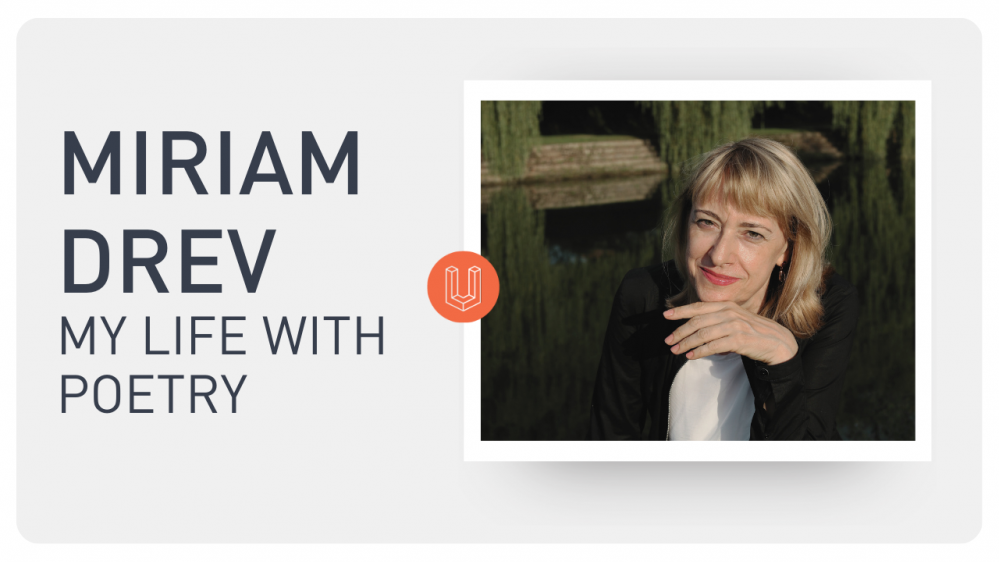


Author
Jakub Kornhauser

Jakub Kornhauser is a Polish poet, essayist, translator, editor, literary scholar and co-founder of the Center for Avant-Garde Studies at the Jagiellonian University in Kraków. He has published eight volumes of prose poetry, incl. Drożdżownia (The Yeast Factory), which won the 2016 Wisława Szymborska Award; four books with essays, incl. a best-selling collection of bicycle texts, Premie górskie najwyższej kategorii (Mountain Climbs Hors Categorie; 2021 Znaczenia Award); several monographs on the European avant-gardes; anthologies of Polish contemporary poetry; as well as translations of books by i.e. Henri Michaux, Gherasim Luca, Gellu Naum, Miroljub Todorović and Dumitru Crudu, Claudiu Komartin, Perrine Le Querrec. Editor-in-Chief of several book series, incl. awangarda/rewizje and Heterotopie (both Jagiellonian University Press), as well as of the academic journal ‘Romanica Cracoviensia’. Member of the Gdynia Literary Prize Jury. He lives in Kraków, Poland.
Photo by Rafał Latoszek


